Design trends

The Anatomy of a Panja Weave: Understanding India’s Heritage Craft

There is a sound that anyone who has spent time in a traditional Indian weaving village never forgets. It is the rhythmic, metallic pull of a panja, a hooked iron comb drawing weft threads tightly across a loom. That sound has echoed through the lanes of Panipat, Agra, and Jaipur for centuries. It is the heartbeat of panja weave rugs, one of the most distinctive and enduring crafts in the entire textile heritage of India.

If you have ever touched a genuine handwoven panja dhurrie and wondered how something so flat could feel so alive, this article is for you. We are going to travel through the full story of the panja weave from its ancient roots and cultural meaning to the hands, tools, and hours that go into creating each piece.

What Is a Panja Weave?

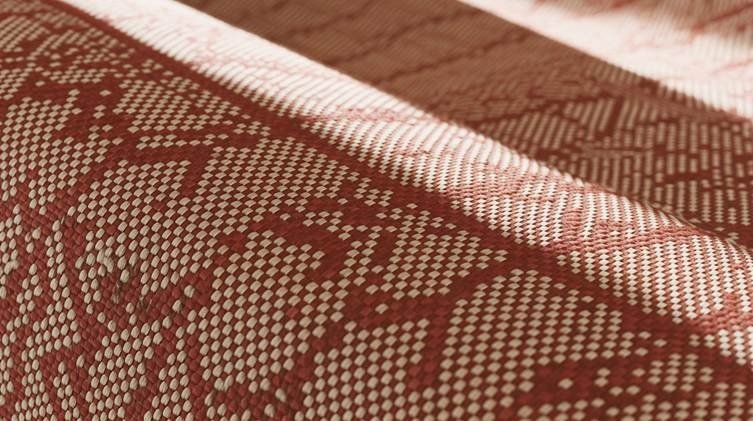
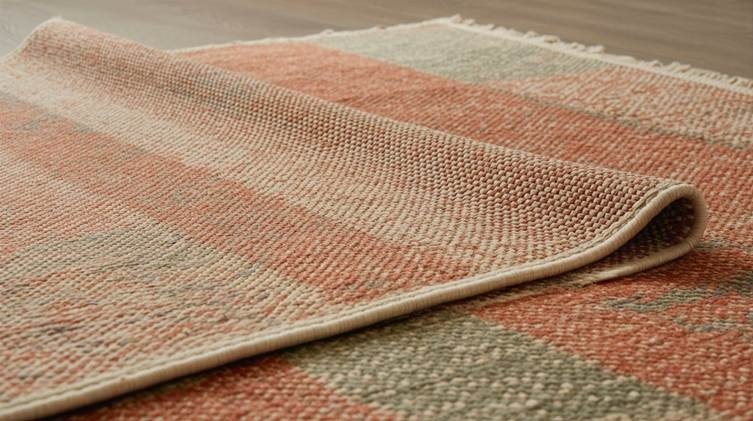
The term panja weave refers to a technique of flat-loom weaving where a hand-held iron hook, the panja (from the Hindi word for ‘five fingers’ or ‘claw’), is used to beat weft yarns tightly into position. Unlike pile rugs, which build texture by knotting fibres upward, panja weave produces a completely flat, reversible surface. Both sides of the finished rug are usable and nearly identical in appearance.

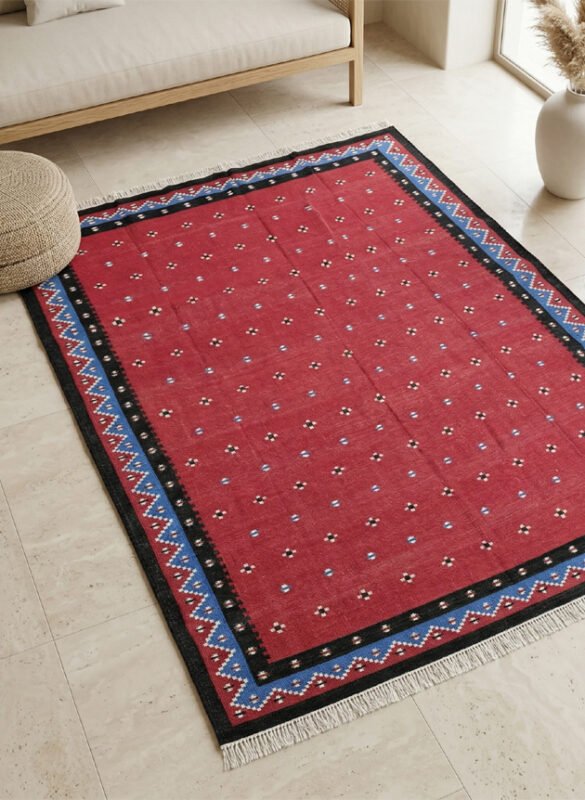
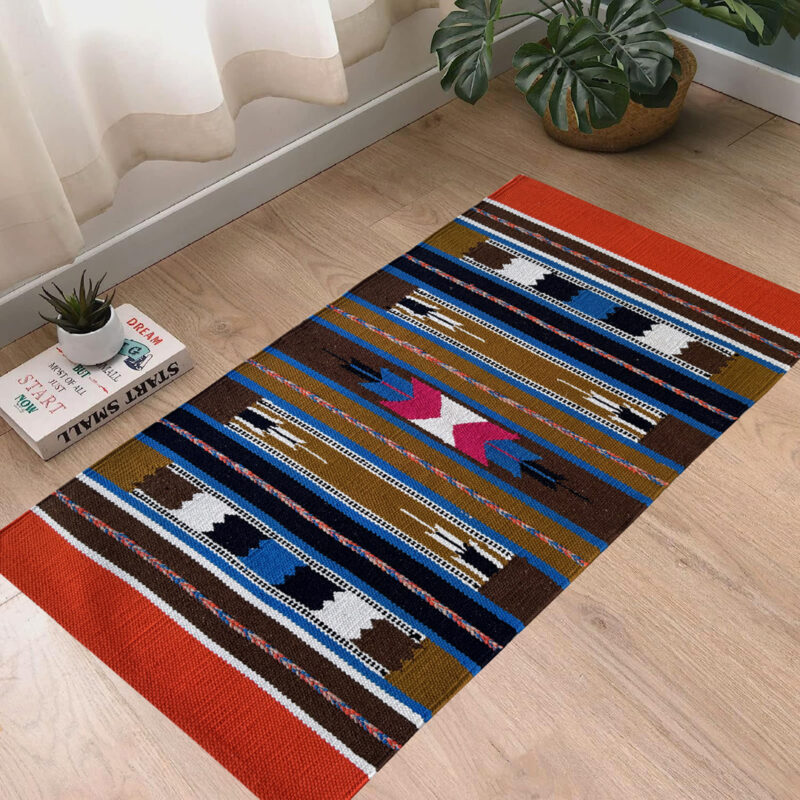
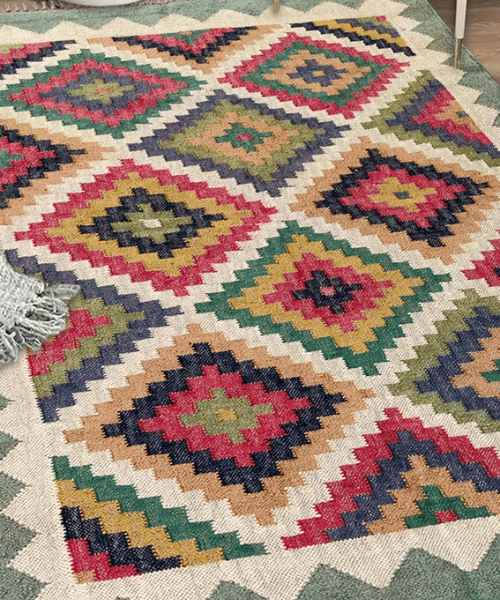
The result is what is traditionally called a dhurrie, a flat-woven floor covering that is lighter, more breathable, and often more geometric in design than pile carpets. Handcrafted dhurrie rugs from India have been floor furnishings in palaces, temples, and homes for well over 200 years, prized as much for their durability as their beauty.

What makes panja-woven pieces genuinely different is the weaver’s direct physical involvement in every single pass of the thread. There is no automated mechanism doing the beating. Every centimetre of a panja weave rug is compressed by hand, making the density, tightness, and feel of the final piece entirely a product of the artisan’s skill and intention.

History and Cultural Significance of Panja Weave Rugs in India

The history of traditional Indian rug weaving stretches back millennia, but the specific craft of panja weaving as we recognise it today took its most defined form during the Mughal period, roughly the 16th to 18th centuries. Royal households commissioned enormous flat-woven floor pieces for ceremonial halls and courtyards. Cotton dhurries were preferred over pile carpets in India’s climate because they did not trap heat, were easy to wash, and could be rolled and stored without damage.

The craft found particular strength in the town of Panipat in Haryana, which became and remains one of the world’s great centres for flat weave textile production. Weavers here developed their own vocabulary of patterns: bold stripes, interlocking diamonds, stylised flora, and repeating geometric grids that carry regional identity as clearly as a signature.

But the panja weave is not only a Haryana story. Rajasthan, Uttar Pradesh, and parts of Punjab all developed their own traditions, each with distinct colour palettes and motif languages. In Agra, weaving communities tied their identity closely to Indian heritage rugs crafted for export and aristocratic patronage. In Jaipur, bold pigment dyes and mirror-image symmetry became a hallmark. These regional variations are what give the broader world of traditional flat weave rugs from India such extraordinary richness.

During British colonial administration, dhurries gained further prominence as British officers and administrators furnished their bungalows with locally woven floor coverings. Indian artisans adapted designs to meet Western tastes, broader borders, softer colour transitions, and occasionally floral motifs drawn from European decorative traditions, creating a visual dialogue between cultures that is itself now part of the craft’s heritage.

The Making of a Panja Weave Rug: Step by Step

Understanding the panja weaving technique means following the rug from raw fibre to finished floor piece. Every stage demands its own form of knowledge, and no single step can be rushed without the whole piece paying the price.

Yarn Preparation and Fibre Selection

Most traditional panja weave rugs are made from cotton, though wool and jute are also used depending on the intended weight and use of the piece. Cotton is the classic choice because it accepts dye evenly, holds its colour across decades, and creates the characteristically crisp flat surface that defines the style.

The cotton is first cleaned, carded, and then spun into yarn of consistent thickness. In heritage workshops, this spinning may still be done on a charkha by hand, giving the yarn a slight organic irregularity that machine-spun thread cannot replicate. It is this very irregularity that gives handmade dhurries their warmth and visual life.

Natural Dyeing: Colour as Heritage

Before the warp is set, the yarn must be dyed. In traditional handwoven panja dhurrie production, colour was drawn from natural sources: indigo for blues, pomegranate rind for yellows, madder root for reds, and iron-rich water for greys and blacks. Each dyebath required specific mordants to fix colour permanently to the fibre.

Today, many workshops use a combination of natural and certified synthetic dyes, but the finest artisan producers maintain natural dyeing traditions because the colours they yield have a depth and gentle variation that synthetic dyes simply cannot match. When you look at an older handcrafted dhurrie rug from India and notice how its colours seem to glow rather than sit flat on the surface, that quality almost certainly comes from natural dye chemistry interacting with the cotton fibre over time.

Setting the Warp

The warp is the skeleton of the rug. These are the lengthwise threads that are stretched taut on the loom before weaving begins, and they determine the rug’s final dimensions, density, and structural strength. Setting the warp correctly is painstaking work. Threads must be evenly tensioned across the full width of the loom; any variation distorts the finished piece.

Traditional panja looms are horizontal floor looms or pit looms, where the weaver sits at ground level with the loom surface in front of them. The warp threads are typically undyed cotton or a neutral fibre because they will be almost entirely hidden by the dense weft packing that the panja technique achieves.

The Weaving Process: Where the Panja Does Its Work

This is the heart of the panja weaving technique. The weaver passes a shuttle carrying weft thread over and under alternating warp threads across the full width of the loom. Then, using the iron panja, they beat the weft thread firmly downward, compressing it tightly against the previous row. This beating motion is repeated after every single pass.

The panja itself is typically a five-pronged iron hook, slightly curved, designed to grip multiple warp threads and drag the weft into precise alignment. Experienced weavers develop extraordinary strength and rhythm in their beating arm over the years of practice. The tightness of the beat determines how dense, firm, and durable the finished rug becomes.

Patterns are created entirely by colour sequencing in the weft. The weaver follows a mental or written map of which colour thread to pass at each row. There is no automated Jacquard mechanism, no punch card, no computer. The pattern lives in the weaver’s knowledge, and every colour transition is a deliberate manual choice. A single traditional flat weave rug of modest size might contain thousands of such individual decisions.

Finishing: The Final Touches

Once the weaving is complete, the rug is cut from the loom and the warp ends are finished, typically by knotting or fringing, to prevent unravelling. The piece is then washed, which relaxes the fibres, evens the surface, and reveals the true intensity of the dyes.

Stretching and blocking ensure the rug dries flat and square. In quality workshops, each piece undergoes a final inspection where any uneven weft rows are corrected and the surface is checked for consistency. Only then is it considered finished.

What Makes Panja Weave Rugs Special Today

In a market flooded with machine-made floor coverings, panja weave rugs stand apart for reasons that go well beyond aesthetics. Every piece is a record of time. A medium-sized dhurrie might represent 80 to 120 hours of a skilled weaver’s concentrated work. That is a human life poured into a floor covering.

They are also extraordinarily durable. Because the weft is beaten so tightly into the warp, a well-made Indian heritage rug can withstand decades of daily use without losing its structural integrity. Many families pass them across generations. The colours may soften, the surface may develop a gentle patina, but the weave remains solid.

At Budhraj Rugs, every panja weave rug in the collection is sourced directly from weaving communities that carry these traditions forward with full authenticity. The craft knowledge, the dye practices, the loom techniques, none of it is approximated or mechanised. What you receive is a genuine continuation of a craft lineage that stretches back hundreds of years.

Panja Weave vs Other Indian Rug Traditions

India produces several distinct rug traditions, and understanding where panja weave rugs sit within that landscape helps clarify what makes them unique.

• Knotted pile rugs (Kashmir, Jaipur): Built by tying thousands of individual knots onto a warp. Thick, luxurious, time-intensive, and highly textured.

• Kilim: A broader category of flat-woven rugs found across Central Asia and the Middle East. Panja dhurries are India’s distinct expression within this flat-weave tradition.

• Handloom cotton rugs: Woven on similar looms but without the hand-beaten panja technique, resulting in a lighter, less dense surface.

• Durrie/Dhurrie: The category name. Panja weave is the specific technique most associated with authentic handcrafted dhurrie rugs from India.

The panja technique is the most labour-intensive of the flat weave methods, and that effort translates directly into the quality and longevity of the finished piece.

Caring for Your Panja Weave Rug

A genuine traditional flat weave rug asks very little in return for years of beauty. Rotate the rug every six months to ensure even wear. Shake it outdoors regularly rather than vacuuming aggressively. For spills, blot immediately with a clean cloth; never rub. For deeper cleaning, a gentle hand wash with mild soap and thorough drying in the shade is all that is needed. Avoid prolonged exposure to direct sunlight to preserve the dye depth.

Frequently Asked Questions

Q1. What exactly is a panja weave rug?

A panja weave rug is a handmade flat-woven floor covering crafted on a loom using an iron hook called a panja to tightly beat weft threads into place, creating a dense, durable, and fully reversible textile.

Q2. How is the panja weaving technique different from regular weaving?

The panja weaving technique uses a hand-held iron comb to manually compress each weft row with far greater force and precision than standard weaving, resulting in a denser, more durable surface with no pile.

Q3. Are handwoven panja dhurries suitable for high-traffic areas?

Yes, handwoven panja dhurries are among the most durable flat-woven textiles available, as the tight manual beating of the weft creates a surface that withstands heavy daily use for decades.

Q4. What materials are used in traditional Indian rug weaving?

Cotton is the most common material in traditional Indian rug weaving, particularly for dhurries, though wool, jute, and silk blends are also used depending on the region and intended use of the piece.

Q5. Where can I find authentic Indian heritage rugs made using the panja technique?

Budhraj Rugs curates a collection of genuine Indian heritage rugs sourced directly from skilled weaving communities that practise the authentic panja technique, ensuring every piece carries the full weight of its craft tradition.